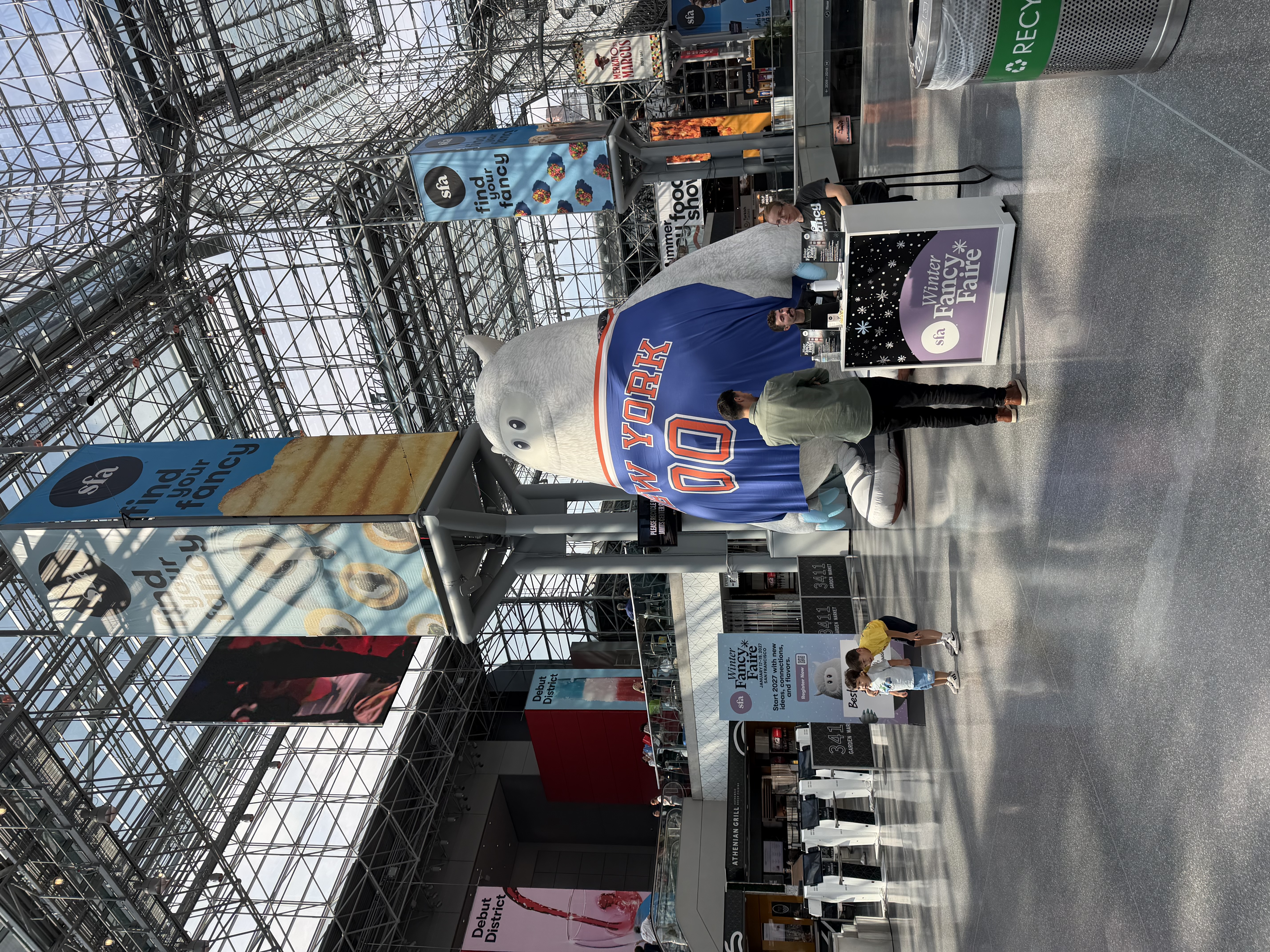
2,500+ food brands. 8,000+ buyers. 900+ brand new products.
The 70th Summer Fancy Food Show, the specialty food industry’s biggest product-discovery event of the year, ran from June 28 to June 30, 2026. Arcangel AI attended to talk to the founders building these brands about something most of them hadn’t thought about: their IP protection. [1]
The samples were incredible. The IP Situation was scary.
Booth after booth, we noticed a pattern. Every founder has a name they love, a logo a friend designed, and amazing packaging. What they almost never have is a registered trademark.
When we asked, “Is your IP protected?” the usually answers clustered into three flavors:
- “Yes!” This answer was unfortunately rare.
- “I think so?” They put a ™ on the label, so it feels official.
- “I’ve been meaning to, but I don’t even know where to start.”
The last one came up the most. And it’s the most dangerous, because in trademark law, meaning to counts for nothing. In the United States, rights flow to the first to use a mark in commerce, and even more powerfully, to the first to register it federally with the USPTO. A great product with an unprotected name is a brand waiting to be taken.
Why the trade-show floor is exactly where this matters
A trade-show is a brand’s coming out party. The moment a founder pours their first sample for a Costco buyer, their name is public, photographed, posted, and noticed by competitors who’d love to ride the same wave.
The data backs up the fear. According to research summarized by IP attorneys, roughly 65% of trademark disputes could have been prevented with basic up-front diligence–a proper search before you commit to a name. [2] And the food and beverage aisle is one of the most contested battlegrounds there is, precisely because category lines have gone blurry. A soda brand now also sells apparel, candles, and frozen fruit; a sauce becomes a lifestyle. The more culturally resonant a brand gets, the more it attracts “neighbors” who want to borrow the hype.
Three case studies that show why trademarks matter for CPG brands
Olipop is suing over olives
In 2025, prebiotic-soda juggernaut Olipop filed suit in the Southern District of New York against a company allegedly selling olive snacks under the name "Olipop." Different aisle, different product. Olipop has spent years building a portfolio that protects not just its drinks but apparel, toys, candles, and more, and it's defending that name with luxury-house intensity. [3] The lesson for a young brand: your trademark is only as strong as your willingness and your ability to enforce it. You can't enforce what you never registered.The “Sambucks” problem
Back in 2005, an Oregon coffee-shop owner named her store "Sambucks”, a play on her own first name, Sam. Starbucks came down hard on her. Starbucks has done the same to "Charbucks," "Haidbucks," and more. [4] The takeaway founders hate to hear: your intentions don't matter. What matters is whether a customer might be confused, and whether the other side has the lawyers to argue it. A five-minute trademark search would have flagged the risk before the signage went up.The $50,000 napkin sketch
One widely cited example in IP circles: a local coffee shop that ended up spending around $50,000 rebranding after a trademark dispute [2]. Rebrands aren't just legal fees. They're new packaging, lost shelf recognition, scrapped inventory, and the gut-punch of telling loyal customers the name they loved is gone.
The brutal math of “I’ll do it later”
Let’s lay the numbers side by side.
Protecting the name early:
- USPTO base application fee: $350 per class of goods (a sauce maker is often just one or two classes). [5]
- A clean, well-prepared filing can sail through with no surprises.
Fighting over the name later:
- Trademark litigators commonly bill $300-$400 per hour. [6]
- A formal opposition or cancellation proceeding can run $5,000 and up. [6]
- A full rebrand, as above, can hit five figures before you count the lost momentum.
More than 60% of trademark applications receive at least one “Office Action”, an official objection from the examiner that has to be answered correctly, or the application stalls (and the fees aren’t refundable). With over 767,000 trademark application classes filed in a single recent fiscal year, examiners are busy, the queue is long, and a sloppy DIY filing is a slow, expensive way to learn this. [7]
Roughly 97% of trademark cases settle before trial [2], which sounds reassuring until you remember that "settling" still means lawyers, leverage, and usually the smaller brand blinking first.
Where Arcangel AI comes in
This is the gap we built ArcAngel to close. Every founder we met wanted protection. Almost none of them wanted to spend their nights deciphering the Trademark ID Manual or guessing at international classes. They're trying to land a Wegmans order, not become amateur IP paralegals.
Arcangel AI turns the scary, opaque part into something you can finish before your booth coffee gets cold:
- Instant clearance searches. Before you fall in love with a name, our AI scans existing marks and surfaces conflicts in seconds, not weeks.
- Guided, automated filing. We translate your product into the right classes and a clean application, dramatically cutting the odds of a costly Office Action.
- The full picture. Trademarks protect your name and logo; copyrights cover your original packaging art, photography, and copy. We help founders see which tool protects which asset, so nothing valuable is left exposed.
What we’re taking home from the food fest
The specialty food world is overflowing with ambition, originality, and genuinely delicious risk-taking. What it's short on is brand protection. Founders are pouring their hearts (and their savings) into names and identities they don't yet legally own.
So if you exhibited this year, or you're already plotting your booth for the 2027 show, here's our one piece of advice between bites: register the name before the world tastes it. The product is the hard part. Protecting it shouldn't be the thing that takes you down.
Taste-tested is up to you. Trademark-protected is up to us.
References
- Specialty Food Association - Summer Fancy Food Show 2026. https://www.specialtyfood.com/fancy-food-shows/summer/
- UpCounsel - Examples of Trademark Infringement Cases. https://www.upcounsel.com/examples-of-trademark-infringement-cases
- The Fashion Law - Olipop Trademark Fight Signals the Growing Stakes of CPG Brand Protection (2025). https://www.thefashionlaw.com/olipop-trademark-fight-signals-the-growing-stakes-of-cpg-brand-protection/
- Trademark Eagle - 10 Real Examples of Trademark Infringement. https://trademarkeagle.co.uk/10-real-examples-of-trademark-infringement/
- U.S. Patent and Trademark Office - Trademarks: How much does it cost? https://www.uspto.gov/trademarks/basics/how-much-does-it-cost
- UpCounsel - Trademark Attorney Cost: Fees, Filing, and Long-Term Expenses. https://www.upcounsel.com/trademark-lawyer-cost
- Rapacke Law Group - The Real Trademark Filing Cost: 2025 USPTO Fee Changes. https://arapackelaw.com/trademarks/trademark-filing-cost/